

|
|
Snow Queen *rocks* – check back soon for some real reviews!
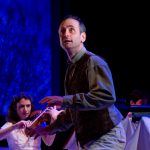
When a child disappears, a policeman follows the trail into a fantasy world inhabited by brawling sailors, giant vacuum cleaners and acres of popcorn in this winsome comedy performed by Toronto’s Alon Nashman (2007’s Kafka and Son).
A tribute to childhood by Quebec-based playwright Wajdi Mouawad — whose drama Scorched was adapted as 2011 Oscar-nominated film Incendies — this story takes a meandering route. As Alphonse walks along a country road, chasing an imaginary hero on a mission to retrieve the world’s cake recipes from a mysterious nemesis, the boy’s friends recount some of his frequent flights of fancy. Nashman is a chameleon, playing dozens of characters along with a gentle narrator who steers the audience to a poignant conclusion. — Pat St. Germain Alphonse’s journey is a winding, and sometimes confusing, one – but since it’s the journey from childhood to adulthood, could it be any less?
There are, to be accurate, two journeys in Wajdi Mouawad’s beautifully-written script. One is the trip of Alphonse, who “accidentally” runs away from home, launching a search for the young boy. The other is the journey of Pierre-Paul Rene, Alphonse’s imaginary (or perhaps not-so-imaginary) friend, who travels in a much more fantastical world – until the two worlds collide, and childhood crashes into adulthood. Along the way, Alon Nashman – a gifted performer – vividly creates a range of characters, from Alphonse to the trippy neighbour who perhaps understands Alphonse more than anyone, and the bizarre denizens of Pierre-Paul Rene’s world – from ancient wizards to talking caves. Creating that world requires some remarkable staging, including a rain of popcorn from the sky (trust me, it makes more sense in context). It, like the rest of this superb production, is pulled off beautifully. “When we’re little, no one tells us much, so we imagine,” Alphonse says at the start of the play. Adults, on the other hand, “don’t want to believe – they want to know.” And perhaps the greatest achievement of Mouawad’s script and Nashman’s performance is in making children of the audience, by forcing us to imagine – and to believe. By JON KAPLAN
There’s no more enchanting show in town than Alphonse, Wajdi Mouawad’s paean to the imagination of the child. In a touching, funny translation by Shelley Tepperman, Mouawad’s multi-level story-within-a-story reminds adults of what we’ve left behind and beguiles youthful viewers with a winning fairy tale.The marvellous Alon Nashman plays dozens of characters, all of them concerned in some fashion with the title figure, a young boy who disappears one day on his version of a quest and discovers — with some sadness — the difference between knowing and believing. Drawing all the characters vocally and physically, Nashman weaves in and out of three narratives involving Alphonse and his invisible friend and alter ego Pierre-Paul Rene, spinning story threads of magic and wonder. It’s the transparency, the openness of Nashman’s performance that makes the script’s emotions so poignant. He makes all his moves in, on and around Vikki Anderson’s splendid set, part jungle gym and part dreamlike staircase, which neatly illustrates the childlike and non-naturalistic sides of the story. Please stay tuned, my website is expanding!
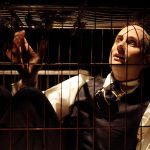
Kafka and Sonreviewed by Mary Brennan August 27, 2010 Alon Nashman’s bleak and utterly compelling Kafka and Son has an intensely pulverising effect even on those of us who didn’t have bullying, authoritarian fathers. This is the nightmare territory of adults projecting their values, ambitions, frailties and failures onto their children. Then blaming them when, almost inevitably, they don’t conform to expectations. Even in his thirties, the writer Franz Kafka couldn’t escape the tyranny of his father’s contempt. He filtered it into his fiction, as if words could exorcise it but to no avail. Kafka senior, the overbearing self-made man, effectively emasculated his only son. Nashman seamlessly serves up both sides of this story. As Kafka senior, he looms larger than life – all bluff and hearty even when shredding Franz’s fragile self-esteem. As Franz, he seems to shrivel into half his size and become a nervy waif who nonetheless recounts his tribulations with an unexpected comic flair. Again, like Gurney-Randall’s Mussolini, the sheer finesse of the performance demands your applause. Nashman pulls you right into the entrails of a mental abuse that makes your heart pound and your skin crawl. The relief of walking out into daylight makes you know how brilliant he is. Kafka and Son“Dearest Father,” Kafka wrote in a letter to his father Hermann in 1919, “You asked me recently why I maintain that I am afraid of you… And if I now try to give you an answer in writing, it will still be very incomplete…” The fifty-page letter never reached Hermann, who outlived his son by seven years. Now it is brought to life in an imaginative new adaptation for stage by Canadian companies Theaturtle and Threshold Theatre, as a monologue for Alon Nashman. Stylistically sublime, ‘Kafka and Son’ is theatrically outstanding. We first meet Nashman as the timorous, insecure Franz, writing the above opening words. His desk: a bed of black feathers atop a small cage, his words: the same feathers as they rained through the mesh as he writes. Nashman then effortlessly morphs into father Hermann, whose guttural, sickly laugh makes the audience as uneasy as Franz. As the latter recounts how crushing an effect his father’s influence has had on him, the monochrome minimalistic set morphs as seamlessly as Nashman into a dining room, an iron bed into a cubicle, all the time the black feathers the central prop. The lighting, which eerily casts a monstrously towering shadow of Hermann as he leers at his inferior offspring, or illuminates a single white feather as Franz discusses his failed proposals, is used to sensational effect. This is intense theatre. Accompanied by brilliantly emotive jewish folk music, Nashman compellingly, with a dark energy that never waivers, details the paternal episodes which have dogged his life ever since: his father’s body, work, Judaism, marriage. “As usual,” Kafka wrote, “I was unable to think of any answer to your question, partly for the very reason that I am afraid of you, and partly because an explanation of the grounds for this fear would mean going into far more details than I could even approximately keep in mind while talking.” Nevertheless, Nashman’s attempt through monologue is worthy of the countless accolades he has hitherto been awarded in Canada. An inspired performance, and a remarkable piece of theatre. Reviewed by Sacha Timaeus 22/08/2010 http://www.freshair.org.uk/node/1737 The Best £12 I’ve Never Spentby Oscar Q. Berry Franz Kafka was born in Prague in 1883, after his death fourty years later his novels have become some of the most influential and extensive work of the 20th century. We join this production as Kafka sits, poised to begin a fifty page letter to his overbearing father Hermann. This shouldn’t bode well for an evening of entertaining theatre. However Alon Nashman’s performance is spell-binding. The audience are taken through a physical tornado of story telling that recalls some of Kafka’s most haunting, charming and moving memories. Even the obvious limitations of performing a one-man show are skilfully avoided, I genuinely didn’t wish for another actor to appear once. Nashman’s characters are funny, detailed and absolutely truthful. The whole production is flawless really; the set (Marysia Bucholc and Camellia Koo), the lights (Andrea Lundy) and the sound design (Darren Copeland) are worth the ticket price alone. Director Mark Cassidy has created something of real tangible beauty – it actually doesn’t matter if you know nothing of Kafka or his writing – simply sit back and enjoy. The attention to detail in the staging and stagecraft shown through Nashman is staggering. I can’t stop thinking about this show. Kafka And SonTheaturtle/ Threshold Theater tw rating 4/5 [sj] THEATER REVIEW The art of being an artistAlon Nashman’s one-man play envisions the intimate dialogue between Franz Kafka and Kafka’s father
By Sam Markson
ASSOCIATE ARTS EDITOR
August 4, 2010
Kafka and Son Alon Nashman Edinburgh Fringe Festival August 8-28, 2010 “You asked me recently why I maintain that I am afraid of you. As usual, I was unable to think of any answer to your question, partly for the very reason that I am afraid of you, and partly because an explanation of the grounds for this fear would mean going into far more details than I could even approximately keep in mind while talking.” Thus begins Franz Kafka’s 45-page letter to his father Hermann, published posthumously as his Brief an den Vater (Letter to the Father). It is a rare piece — timid yet frank, where Kafka is usually bluntly surreal. Kafka, despite his reputation as an artist after death, was an insurance clerk and bureaucrat in life, and the letter reads like a legal report: calculated, exact, each word tempering the prior, riposting an anticipated parry, and flinching at invisible strokes. He’s at first much more equivocal than we’re used to — the artist unsure whether to accuse or forgive, worried equally that he will say too little as well as too much. Is it art? It’s hard to deny the sincerity and depth of feeling. Many might empathize with the then middle-aged Kafka and his resilient father-issues. But we are not the intended audience. Kafka gave the letter to his mother to deliver to his father, but she only returned it to her son. Four years later, Franz Kafka would die of tuberculosis at the age of forty. It is, then, an unfinished symphony. We are and will always be left without the voice of Hermann Kafka, just as Franz Kafka was left without any reconciliation with his father. We, the readers, end our symphony mid-cadence. Enter Alon Nashman. Coming off the success of Howl (based off the famous Ginsberg poem), and with the encouragement and cooperation of director Mark Cassidy, Nashman set out to bring this relatively obscure work to the stage. His task is in one sense simple; Nashman (in a chance encounter between he and I in the Fringe members room) remarked that “the letter already had a theatrical structure,” wherein “the father, by Kafka, is given the role of destroying all the arguments…” Nashman is the sole performer, and he plays both the timid, wordy Franz and the loud, robust Hermann. His portrayal of Hermann is chilling, and we are reminded that we see a man through the lens of a child’s eyes — he is enlarged, grotesque. The stage is sparse, the lighting particular (we’re in a man’s mind, after all). Objects and their relations to each other follow laws other than physics. There’s a pen, two pages, a narrow bedframe — and feathers, all black, with one white. The sound was notable. Taken from Golijov’s Yiddishbbuk (as performed by the St. Lawrence String Quartet), and adapted for the production, it had a wonderfully Bergian quality. Golijov himself wrote the piece as a tribute to Kafka, so it’s in particularly good faith in its present state. There is a refreshing dynamism about the performance. While utterly depressing in one regard, Kafka manages to draw hope from horror, and Nashman follows suit. The symbolism of the white feather as Nashman pens the end of Kafka’s entreaty is not lost on the audience. Kafka ends on a note of strength, and of love. This is a play not only of disjunction, but of the power of the human spirit. Note that this is a one-man play for a reason. The format affords Nashman much greater power and flexibility over the emotional tenor. Nashman likened it to “the big skate at the olympics…the long breath to sustain.” Some one-man shows are formed out of casting budget cuts, but the particular case of Kafka’s letter translate particularly well here. For the true actor, the story is not only of the character but of themselves. Through Nashman we see Kafka, and through Kafka we see Nashman. This is the peculiar office of theater — the odd Hegelian dialectic of script and reader — but it is particularly profound when there is one man to read one letter. The “team” aspect is removed. There are no safeties, for either man, and the struggle for human communication becomes like an arena match. I cannot say who is gladiator and who is beast. Each is both, in their way. Some of this relationship is private — intimate lovers broadcast their all-telling nothings in whispers, not shouts — but I do think that an attentive audience will see the feeling that’s there. I did, and I suspect that I’m not alone. I admit that this is a piece that grew on me more after the performance than during, but that is how I like my art. Kafka ends his letter: “…this whole rejoinder — which can partly also be turned against you—does not come from you, but from me. Not even your mistrust of others is as great as my self-mistrust, which you have bred in me. I do not deny a certain justification for this rejoinder, which in itself contributes new material to the characterization of our relationship. Naturally things cannot in reality fit together the way the evidence does in my letter; life is more than a Chinese puzzle. But with the correction made by this rejoinder — a correction I neither can nor will elaborate in detail — in my opinion something has been achieved which so closely approximates the truth that it might reassure us both a little and make our living and our dying easier.” Perhaps by Kafka’s living and dying — and now by Nashman’s living — our lives, if not the Kafkas’, are made easier. Theaturtle and Threshold Theatre
Kafka and SonBedlam Theatre | Edinburgh Festival Fringe Outside Bedlam (rather fittingly) there is a man in a cage giving out flyers. His son sits on top playing the violin. He is promoting his show, Kafka and Son, which comes with very high ratings from across Canada. Fortunately, Alon Nashman’s approach to theatre-making is as imaginative and convincing as his promotional technique. The play is adapted and directed by Mark Cassidy from Franz Kafka’s ‘Letter to His Father’, written in 1919 but never sent. It provides a brilliant insight into Kafka’s personality and a context for stories such as ‘The Trial’, ‘The Castle’ and ‘Metamorphosis’. Performing solo, Nashman creates, with care, two very distinctive characters: the senior Kafka, an imperious shop-keeper, a bully to his staff and his family; and his cowed son, insecure, sickly and desperate for love. The Letter offers episodes from Franz’s life on which his father’s influence has been most cruelly felt. Scenes at the dinner table, the swimming pool, at bedtime and in the synagogue are vividly portrayed in a performance that is vocally and physically strong. The father’s attitude and language, his bulk and his ability to belittle and terrorize his son are painful to witness. Simple props are used to great effect. A bare metal-spring bed, a cage and a frame become all manner of settings. Mounds of black feathers provide food, pens and weather. Franz was hugely troubled about sex, and his ‘inability to marry’ despite three attempts, with three different women, contributes to the physical and psychological ailments which dog his short life. Needless to say, his father’s advice on how to overcome this inability renders Franz speechless with horror. The women are beautifully represented by one large white quill, a beam of light on an otherwise suitably monochrome stage. A key moment in the text and a stunning part of the play is when Nashman’s narration changes from the voice of Franz to his father. This Nashman accomplishes with panache – the voice becomes bigger, deepens; a giant shadow is cast on the back wall. Kafka means jackdaw. The final image, in which Franz exchanges black feathers for white wings and takes flight, little knowing he will become one of the twentieth centuries most influential novelists, resonates. Lisa Wolfe Kafka and Son
|
|
Copyright © 2012 Alon Nashman - All Rights Reserved |